
The best type of TikTok ads depends on the campaign objective: use native feed formats for ongoing performance, premium takeovers for launch visibility, interactive formats for participation, and catalog formats for product discovery. TikTok's ad ecosystem now includes nine distinct formats, while benchmark CTRs range from 0.84% for standard In-Feed ads to 16.4% for TopView, so treating every placement as interchangeable is a costly mistake.
The popular advice is to “make TikToks, not ads.” That's useful for native creative, but incomplete. A launch announcement, a creator testimonial, a hashtag campaign, and a product catalog are different audience experiences, so they need different placements, production workflows, and success criteria.
This guide organizes eight formats by how people encounter and act on them. You'll see the trade-offs between native feed distribution, app-opening visibility, community participation, creator-led amplification, in-app shopping, catalog discovery, and external mobile reach. The format mix reflects TikTok's shift from a short-video feed with sponsorships into a broader full-funnel advertising system spanning awareness, engagement, and commerce. TikTok's advertising evolution explains that broader format mix in more detail.
ClipNova can support the production layer with scripts, voiceovers, captions, product videos, UGC-style variants, translations, and multi-aspect exports. For planning support, marketers can also use this AI listicle creation tool to turn campaign ideas into structured content concepts.
Table of Contents
- 1. In-Feed Ads Native Ads
- 2. TopView Ads
- 3. Brand Takeover Ads
- 4. Branded Hashtag Challenges
- 5. Spark Ads
- 6. Collection Ads
- 7. Catalog Listing Ads
- 8. Pangle Native Ads Third-Party Developer Ads
- 8 TikTok Ad Types Comparison
- Match the Format to the Campaign Job
<a id="1-in-feed-ads-native-ads"></a>
1. In-Feed Ads Native Ads
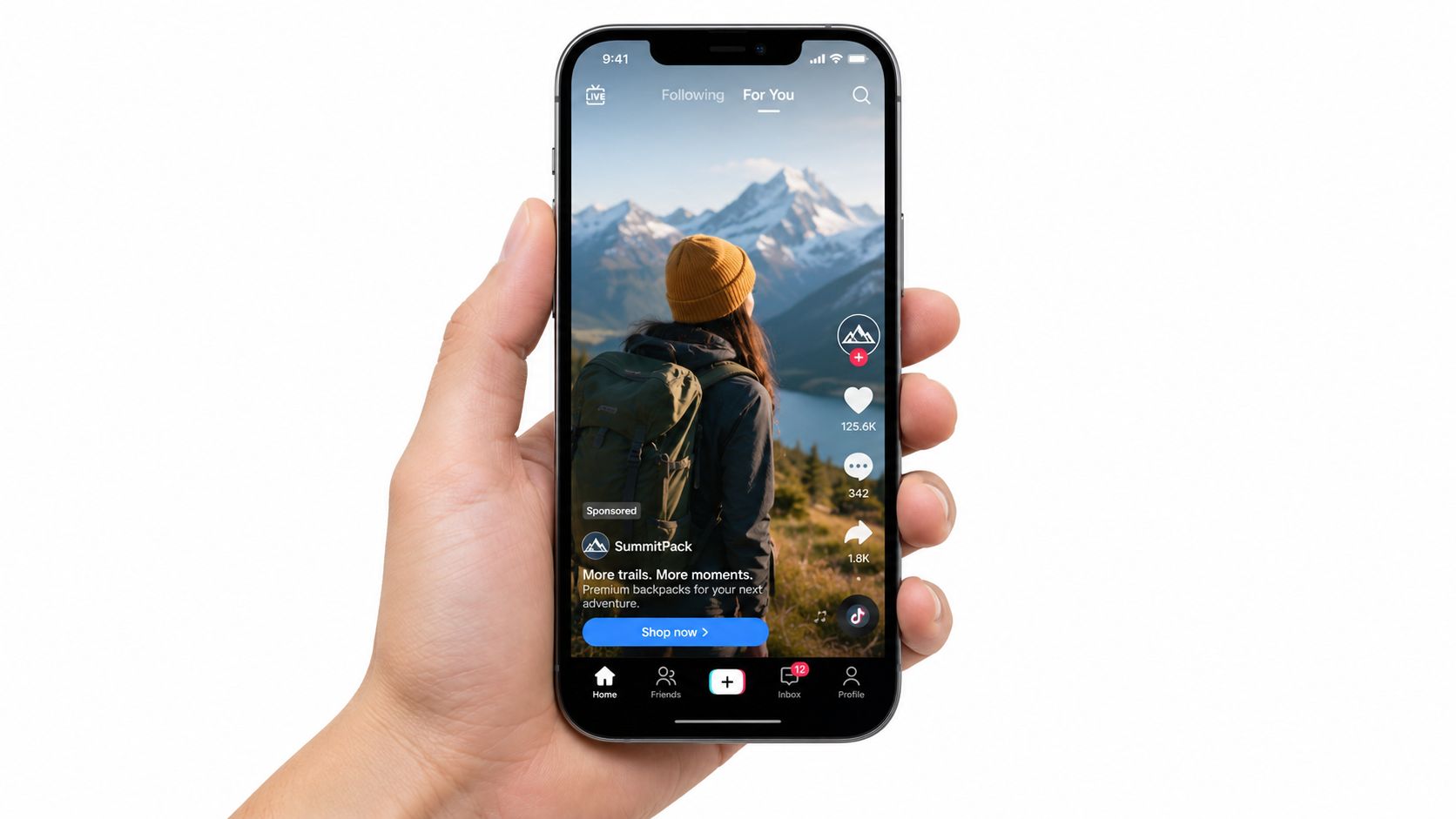
In-Feed Ads are often the most useful format for testing, precisely because they compete directly with ordinary TikTok posts. They appear in the For You feed with a sponsored label, allowing viewers to scroll, interact, or follow a call to action. Videos can run for up to 60 seconds, but the appropriate length depends on how quickly the creative can explain its message.
The format suits product demonstrations, creator-style reviews, app walkthroughs, and direct-response offers. Glossier-style product demos, Shein-inspired fashion hauls, and Duolingo-like humorous videos fit because viewers encounter them during feed discovery rather than at app opening. Choose In-Feed when the campaign needs repeated exposure, measurable actions, and several creative tests.
<a id="build-for-the-scroll-not-the-storyboard"></a>
Build for the scroll, not the storyboard
Open with a visual change, spoken idea, or product reveal. A polished commercial can perform in the placement, yet corporate framing may feel disconnected from surrounding content. A recognizable human voice, immediate context, and one action aligned with the landing page create a clearer path from view to response.
Use this production workflow:
- Write several hooks: Change the opening problem, question, claim, or visual so each version tests a distinct reason to keep watching.
- Record proof early: Show the product, interface, result, or use case before a long brand introduction.
- Add readable captions: Captions preserve the message when sound is unavailable and reinforce the sequence of ideas. Teams can follow this guide to add subtitles to a video.
- Export native variants: Create vertical versions first, then adapt the concept for other placements when required.
ClipNova can support this asset strategy with scripts, voiceovers, captions, product videos, UGC-style variants, translations, and multi-aspect exports. Build a small set of concept variations rather than one finished asset, then compare how different openings support the same offer.
Practical rule: Use In-Feed when the campaign depends on repeatable testing, flexible calls to action, and a steady flow of creative variations.
The trade-off is competition. Each ad must earn attention beside organic videos, so rapid explanation and clear proof may matter more than a large production budget.
<a id="2-topview-ads"></a>
2. TopView Ads
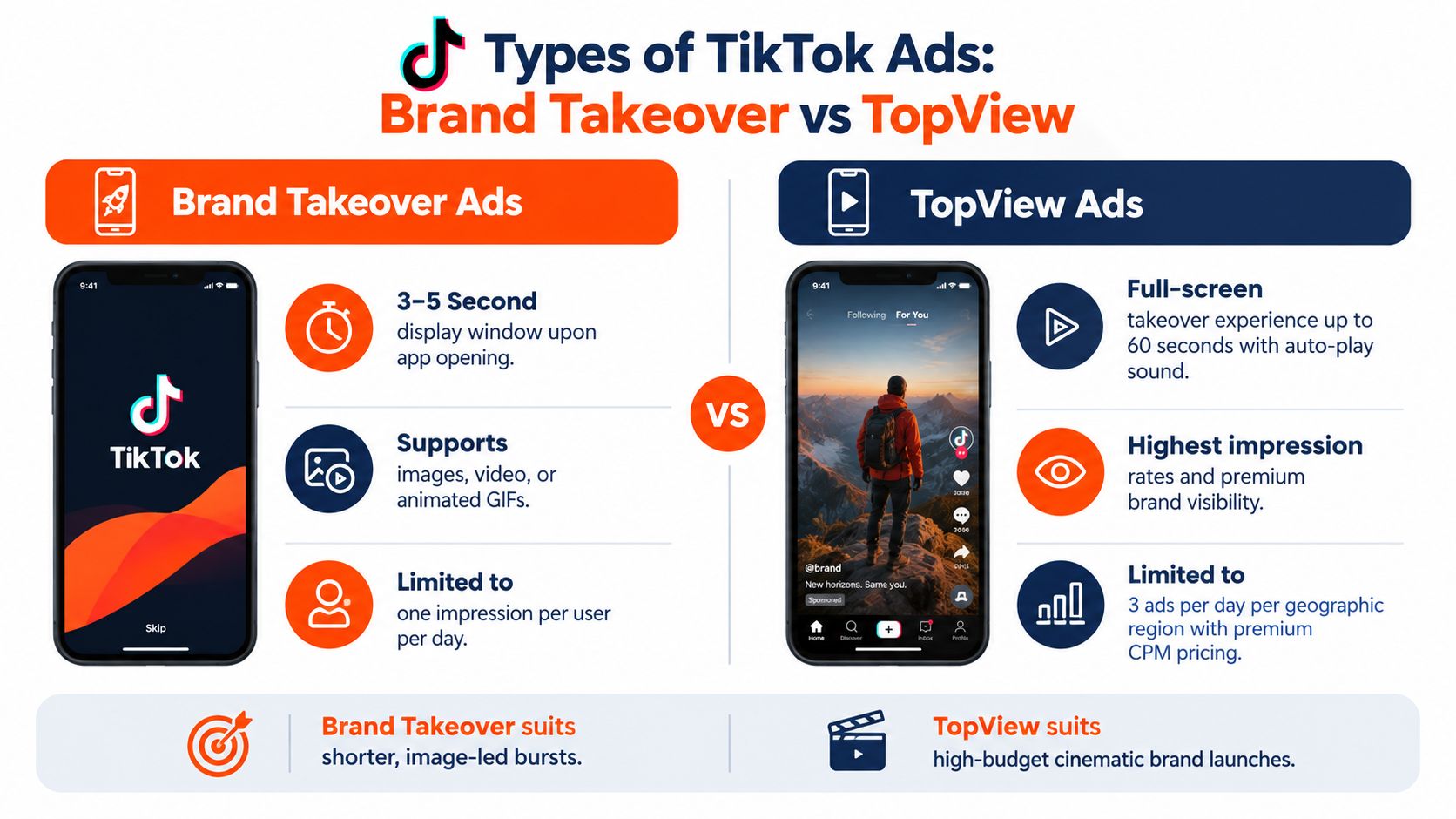
TopView earns premium visibility by appearing at the first major attention moment after someone opens TikTok. Its full-screen video can run for up to 60 seconds, giving a launch film, trailer, seasonal announcement, or brand story more room than a short feed interruption. The format is therefore a media decision as much as a creative one: reserve it for a message that benefits from immediate reach and sustained viewing.
A product reveal, entertainment trailer, or major release can justify that placement. An ordinary reminder usually cannot. TopView should make its purpose clear in the opening frame, then use the remaining time for product detail, atmosphere, proof, or a controlled narrative. The call to action still needs to be easy to identify.
<a id="build-the-ad-around-its-first-moment"></a>
Build the ad around its first moment
Start by deciding what the viewer should remember after the opening. Put the product, character, transformation, or announcement on screen immediately, then develop the idea through coordinated visuals and sound. Prepare alternate openings before committing the media buy, since different first moments, brand reveals, or benefit statements may change how quickly the message becomes clear.
A practical production sequence is:
- Set the launch promise: Reduce the campaign to one memorable announcement or benefit.
- Storyboard the first beat: Make the initial visual understandable without relying on a long introduction.
- Edit for sound and silence: Combine voiceover, music, effects, and readable visual information so the sequence remains coherent with audio on or off.
- Create native variants: Keep the full-screen composition intact while adapting openings, pacing, and calls to action for testing.
ClipNova's Text to Video workflow can help teams assemble cinematic concepts from prompts. Ultra mode supports native synced audio and 1080p output, which suits a coordinated visual and sound treatment rather than a simple talking-head variation. Build several opening concepts, record the product or use case early, and compare how each version supports the same offer.
Benchmark results support separating TopView from ordinary feed buying, but they should not be treated as forecasts. One 2026 compilation lists a 2.87% average CTR for TopView and 1.62% for In-Feed Ads, while another benchmark set reports TopView at 16.4%. The difference between benchmark sets shows why advertisers should evaluate placement context, creative quality, audience, and measurement together. The 2026 TikTok benchmark compilation provides the comparison.
<a id="3-brand-takeover-ads"></a>
3. Brand Takeover Ads
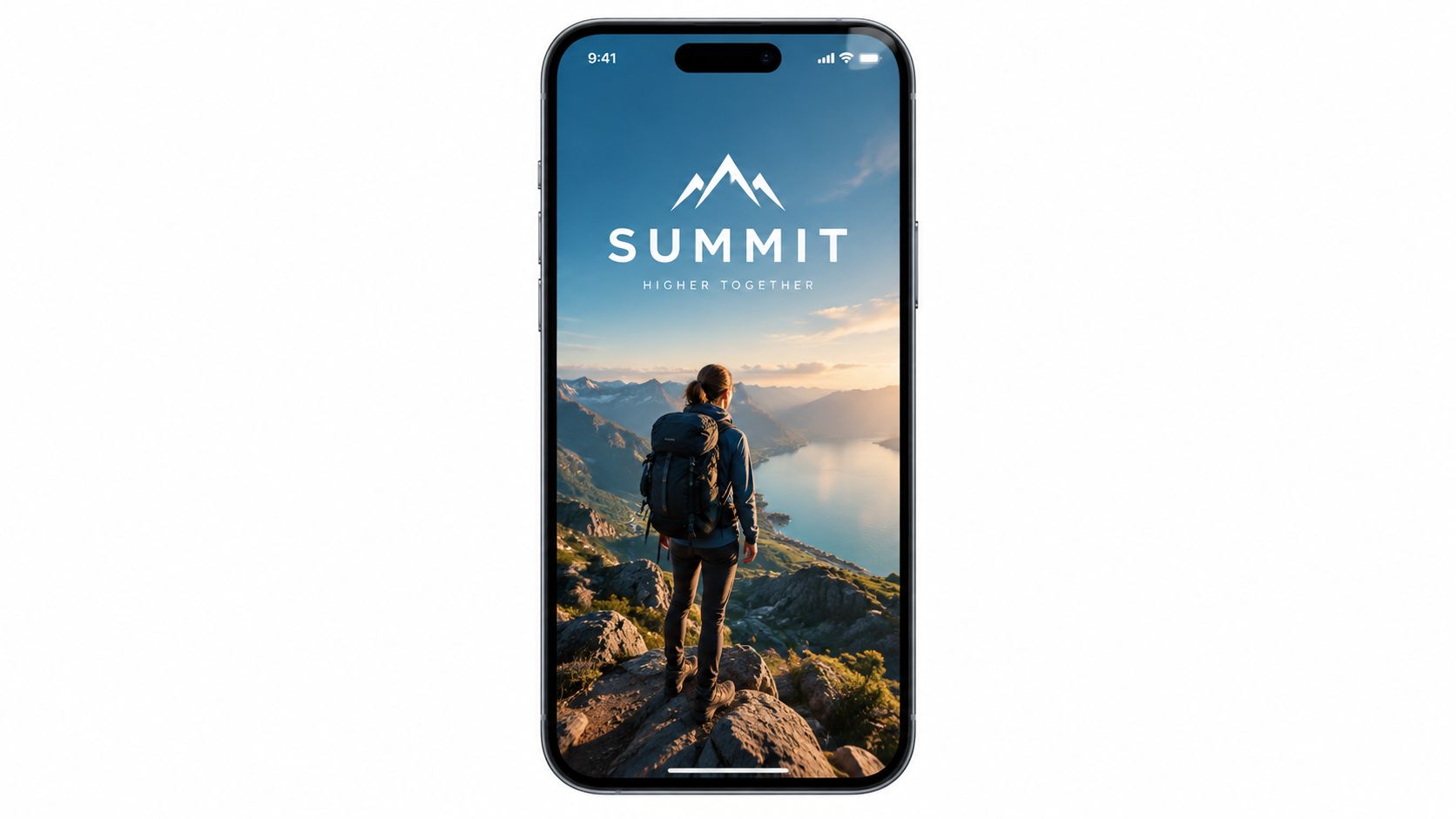
Brand Takeover Ads appear as the app opens, using a short full-screen image, video, or animation. The format typically lasts around 3 to 5 seconds, leaving little time for setup or explanation. Its job is immediate recognition, with a link that can send viewers to an external destination.
The placement resembles TopView because both meet users early in the session, yet the audience encounter differs. TopView offers a longer video canvas and a feed-adjacent viewing experience. Brand Takeover functions more like a launch marker or single-message interruption.
<a id="build-for-recognition-not-explanation"></a>
Build for recognition, not explanation
A beauty launch can place the product beside a brief claim. A seasonal promotion can lead with its offer and a direct action. An app campaign can use a visual cue that makes the download destination clear. e.l.f. Cosmetics, McDonald's, and Snapchat represent the type of brands that may choose this format when immediate recognition matters more than product education.
Set the brief around one decision:
- Choose the first visual: Give priority to one object, face, logo, or product pack.
- State one message: Focus the promise on a single benefit, offer, or announcement.
- Specify the next action: Make the CTA understandable without asking viewers to interpret the scene.
Static creative may suit a campaign with a strong product visual and limited video production capacity. ClipNova's AI image utilities can support concept directions, background treatments, and rapid visual alternatives. Review each version for brand clarity, destination relevance, and readability before delivery.
The shorter the placement, the less room you have for brand education.
Use Brand Takeover to establish recall and prompt a simple action. Put product details on the landing page, product page, or in a follow-up campaign. Premium inventory is limited and can cost $50,000 or more, according to TikTok advertising format and cost guidance. Confirm current pricing and availability before preparing a forecast.
<a id="4-branded-hashtag-challenges"></a>
4. Branded Hashtag Challenges
Branded Hashtag Challenges turn the audience into participants. Instead of asking viewers only to watch or click, the format invites them to recreate a movement, demonstrate a product use, respond to a prompt, or publish a themed video with the campaign hashtag. Paid distribution helps people discover the idea, while participants create much of the campaign's visible content.
The format therefore depends on behavior design. A viewer must understand what to record, which visual or audio cue to use, and why participation feels worthwhile. Guess's fashion-oriented #InMyDenim campaign and e.l.f. Cosmetics' #EyesLipsFace illustrate the approach: each links a recognizable creative behavior with a product category.
<a id="build-the-action-before-naming-the-challenge"></a>
Build the action before naming the challenge
A memorable hashtag cannot compensate for a complicated mechanic. Start by defining the audience action, then test whether a creator can demonstrate it quickly and whether a participant can reproduce it with limited equipment.
Use this workflow:
- Specify one repeatable action: Make the behavior clear in a short teaser, with no extra steps competing for attention.
- Select aligned creators: Seed the idea with creators whose audiences understand the category and can demonstrate the format credibly.
- Reduce production demands: A phone, simple prop, reaction, or familiar movement should be enough to join.
- Prepare moderation and curation: Decide how submissions will be reviewed, featured, and reused before responses arrive.
- Evaluate participation quality: Separate original videos and relevant engagement from passive views.
ClipNova can support the seeding stage. Teams can use a text-to-video prompt to develop teaser concepts, instruction videos, and alternate openings before creator content is available. These assets explain the behavior, while community submissions provide the participation signal.
Choose this format when the campaign needs participation, cultural association, or user-generated content. Choose another format when the brand cannot offer a simple behavior or lacks a plan to moderate and reuse submissions.
<iframe width="100%" style="aspect-ratio: 16 / 9;" src="https://www.youtube.com/embed/Cfn-sS00_N8" frameborder="0" allow="autoplay; encrypted-media" allowfullscreen></iframe><a id="5-spark-ads"></a>
5. Spark Ads
Spark Ads turn an existing organic TikTok post into paid distribution while retaining its original identity and engagement context. The post can come from the brand account or an approved creator account. Viewers encounter it in a paid placement, but the creator name, comments, likes, and native interaction remain part of the experience.
That placement makes Spark Ads suited to campaigns where audience trust depends on visible social proof. A fashion brand can promote an influencer unboxing, a SaaS company can distribute a creator demonstration, and a food brand can amplify a chef's recipe. The production workflow starts with identifying organic posts that already explain the product clearly, securing promotion rights, then adapting the CTA and audience settings without stripping away the post's original context.
<a id="choose-the-post-before-choosing-the-budget"></a>
Choose the post before choosing the budget
Select a Spark candidate by the action it can support:
- Product understanding: The creator presents a credible experience, demonstration, use case, or transformation.
- Audience relevance: Viewers resemble the prospects the campaign needs to reach.
- Comment evidence: Responses contain questions, intent, or useful objections that the ad can address.
- Permission and identity: The brand can promote the post and use the associated creator identity.
- Testing range: Available posts offer different openings, objections, use cases, or calls to action.
Follower count alone is a weak selection rule. A smaller creator with a focused audience and direct product experience may provide stronger advertising material than a large account with limited category relevance. Teams comparing sourcing methods can use This UGC platform comparison for brands when building a creator pipeline.
ClipNova fits the preparation stage rather than replacing creator evidence. Teams can use a text-to-video prompt to develop alternate hooks, briefing examples, and CTA variations before approved posts are ready. Those drafts help creators understand the desired behavior and give media teams testable creative directions.
Benchmark results should guide testing, not determine expectations. One reported 2.4% CTR for Spark Ads, while another listed 2.21%, showing why performance figures need dataset and campaign context. The benchmark data places Spark between broad awareness and commerce-oriented applications. Evaluate the format through message credibility, qualified engagement, and downstream action, then compare it with other paid creative built for the same objective.
<a id="6-collection-ads"></a>
6. Collection Ads
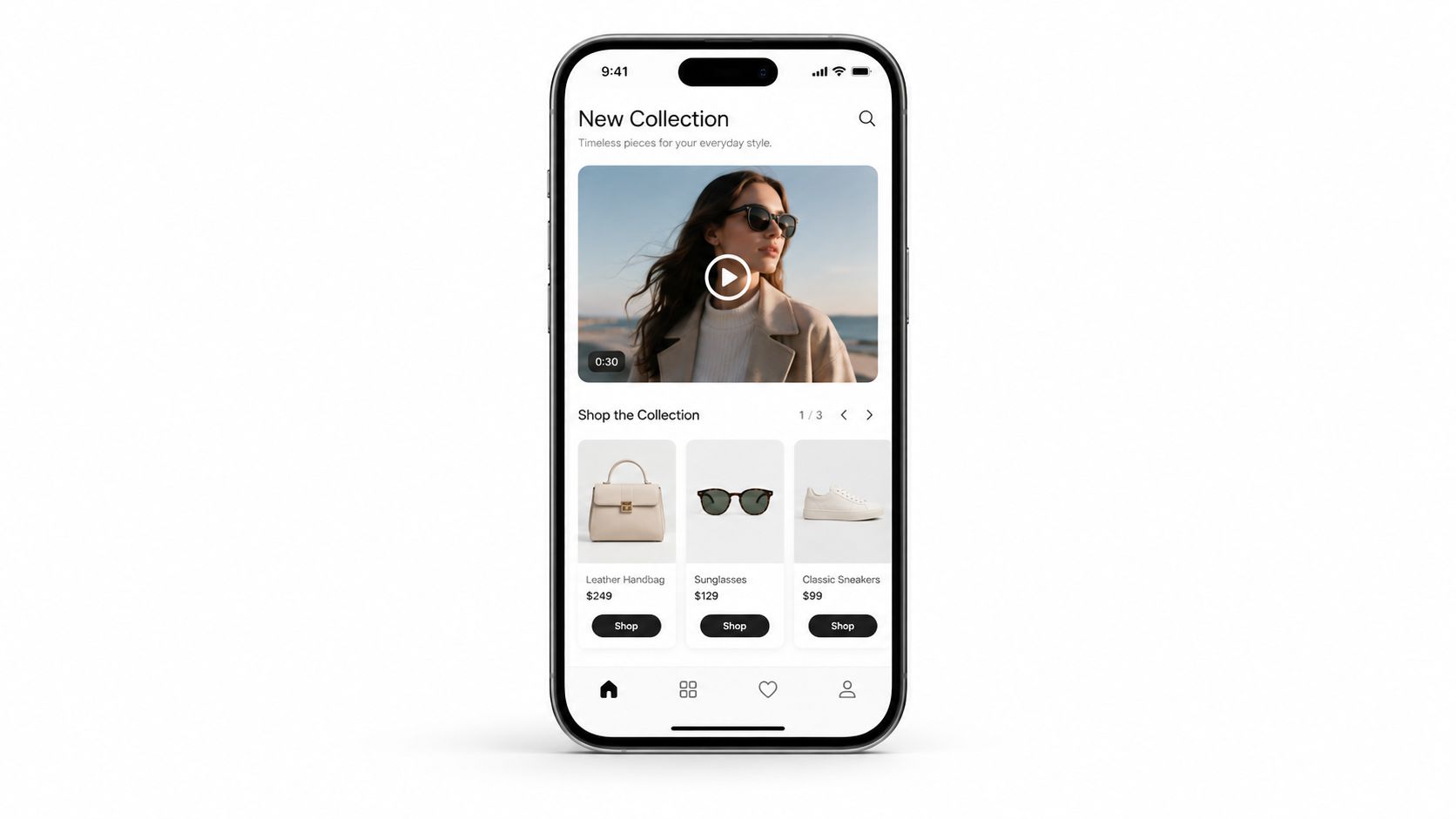
Collection Ads connect a hero video with a browsable product set, letting viewers move from a product story to discovery within TikTok where the format is available. They suit brands selling related SKUs, including a seasonal fashion range, a beauty routine, or coordinated home products.
The format has two linked jobs. The video establishes the theme and attracts attention. The product set gives interested viewers a way to browse. Showing every SKU in the opening creative can weaken that relationship, so feature a few representative products and make the collection's purpose clear.
<a id="use-the-collection-as-a-merchandising-decision"></a>
Use the collection as a merchandising decision
Start with the shopping question the ad should answer. “New arrivals,” “festival essentials,” “starter routine,” and gifts organized around a category provide a clearer structure than an unfiltered inventory feed. Use Collection Ads when customers need to compare or explore several connected products. Use a simpler native format when one item and one action are sufficient.
Set up the assets in this order:
- Collection logic: Group products by use case, audience, season, or price point.
- Hero alignment: Make the opening video represent the products available to browse.
- Inventory readiness: Confirm that every featured item is available and correctly connected.
- Visual consistency: Match lighting, cropping, and styling across product images.
- Offer clarity: Check that pricing, availability, and promotions agree across the video, product set, and destination.
Product teams can use picture-to-video AI to turn approved product imagery into motion concepts. They can then add voiceover, captions, or visual sequencing that supports the collection theme. ClipNova helps with creative preparation, while product data, inventory, and offer accuracy still require commerce-team checks.
A larger product set increases the need for consistent catalog information, stock control, pricing checks, and a landing experience that continues the same shopping logic. Review those elements before launch, then compare browsing behavior and downstream actions with formats built around a single product.
<a id="7-catalog-listing-ads"></a>
7. Catalog Listing Ads
Catalog Listing Ads place individual products in scrollable shopping environments such as Explore, Shop, or Search pages. TikTok can match items to users through shopping signals, so results depend on more than an attractive ad. Product data, imagery, and merchandising decisions determine whether a viewer can recognize, evaluate, and reach the right item.
The audience encounters products one at a time and acts through discovery, product-page visits, or purchase consideration. That makes the format operationally different from Collection Ads. Catalog Listing Ads suit retailers with enough assortment for product matching and ongoing feed maintenance. A limited range may be better served by an In-Feed or Collection campaign with a clearer creative narrative.
<a id="make-catalog-quality-part-of-media-execution"></a>
Make catalog quality part of media execution
A catalog ad inherits the strengths and weaknesses of its feed. An accurate price, available inventory, clear title, complete attributes, and relevant destination support the shopping action. A strong product image cannot correct missing or conflicting information.
Use a feed review process that covers:
- Product accuracy: Synchronize pricing, inventory, descriptions, and destinations.
- Image quality: Choose clear, consistent photography that identifies the item during a fast scroll.
- Search language: Write titles and descriptions using terms customers are likely to search.
- Attributes: Complete categories, colors, sizes, materials, and other relevant fields.
- SKU analysis: Compare results by product and category to find demand patterns and creative gaps.
- Seasonal relevance: Refresh merchandising language as customer needs and trends change.
ClipNova can support creative preparation by turning approved product imagery into motion concepts with picture-to-video AI. Teams can then test captions, voiceover, or visual sequencing around selected products. The commerce team still needs to verify inventory, pricing, product data, and destination accuracy.
A practical workflow starts with feed validation, continues with product-level testing, and ends with exclusions for unavailable or weakly matched items. Review which products attract attention and which drive downstream actions, then adjust titles, images, attributes, or merchandising groups. Catalog Listing Ads work best when paid media and commerce operations share responsibility for the system behind the placement.
<a id="8-pangle-native-ads-third-party-developer-ads"></a>
8. Pangle Native Ads Third-Party Developer Ads
Pangle places ads in third-party mobile apps and games across ByteDance's advertising network. The viewer may encounter the ad during gameplay, browsing, or another mobile activity, not inside TikTok. That changes the decision rule: use Pangle when external mobile reach supports the campaign goal, and when the creative remains clear without TikTok trends, hashtags, or creator context.
A shopping app user should understand the product and next action immediately. For a mobile game advertiser, that action may be an app install. For broader awareness, Pangle can extend a concept that has already worked in TikTok's native environment.
<a id="build-for-the-placement-not-the-platform"></a>
Build for the placement, not the platform
Pangle creative must carry its own explanation. A recognizable trend, comment thread, or creator identity may lose meaning in a third-party app. Keep the product, benefit, and CTA visible even when the viewer has no TikTok context.
Use this production sequence:
- Strip platform references. Remove TikTok-specific language, hashtags, and signals that do not travel.
- State the destination. Make the install, product page, or landing action obvious.
- Recheck audience assumptions. Targeting that fits TikTok may not transfer directly to external inventory.
- Segment app environments. Compare gaming, lifestyle, news, and other categories rather than treating Pangle as one placement.
- Adapt proven assets. Start with a tested TikTok concept, then adjust pacing, framing, and explanation for the surrounding app.
ClipNova can help turn approved product or campaign imagery into motion variations for this workflow. Keep the core message consistent while testing versions suited to different app contexts.
Set a controlled test before expanding spend. Report results by creative and app category, then separate weak context matching from a weak offer or hook. Pangle can add distribution, but external reach may reveal problems that native TikTok performance did not expose.
Use Pangle to extend a proven idea, not to rescue an unproven one.
Its advantage is access to mobile environments beyond TikTok. Its trade-off is less support from TikTok's creator and community signals, so the ad must explain itself quickly.
<a id="8-tiktok-ad-types-comparison"></a>
8 TikTok Ad Types Comparison
| Ad Format | Implementation Complexity 🔄 | Resource Requirements ⚡ | Expected Outcomes 📊⭐ | Ideal Use Cases 💡 | Key Advantages ⭐ | Quick Tips 💡 |
|---|---|---|---|---|---|---|
| In-Feed Ads (Native Ads) | Moderate, needs creator-style creative and trend alignment | Low–Medium, quick production, multiple variants, modest budget | High engagement & reach; ⭐⭐⭐⭐ | Awareness, traffic, conversions with authentic content | Native look, cost-effective, leverages recommendation algorithm | Use trending audio, test 15–30s, create rapid A/B variants |
| TopView Ads | High, premium full-screen production and precise scheduling | High, cinematic assets and large budgets; limited inventory | Maximum visibility & recall; ⭐⭐⭐⭐⭐ | Major launches, brand dominance, event promos | Guaranteed premium placement and immersive experience | Hook in first 2–3s; use Ultra/1080p; reserve for big moments |
| Brand Takeover Ads | Medium, short, high-impact creative (3–5s) and timing | High CPM but lower production than TopView | Strong immediate impressions; ⭐⭐⭐⭐ | Short promos, app installs, quick CTAs | Instant app-open visibility; supports images/video/GIFs | Keep message single-focused; bold visuals; clear CTA |
| Branded Hashtag Challenges | High, campaign design, creator seeding, moderation | High, creative development, influencers, paid seeding | Massive UGC & viral potential (variable); ⭐⭐⭐⭐–⭐⭐⭐⭐⭐ if successful | Community building, viral engagement, Gen Z reach | Highest viral potential; long-tail organic amplification | Seed with creators, clear simple rules, allocate 30–40% promo early |
| Spark Ads | Low, promote existing organic videos with paid reach | Low, uses published content; lower production cost | Authentic performance and efficient ROAS; ⭐⭐⭐⭐ | Performance marketing, scaling high-performing UGC | Preserves organic engagement; faster, cost-effective launch | Boost top-performing clips; obtain creator licenses before scaling |
| Collection Ads | Medium–High, hero video + product feed & shoppable setup | Medium, catalog integration, product assets, in‑app checkout setup | Higher AOV and conversions for e‑commerce; ⭐⭐⭐⭐ | DTC/e‑commerce with multiple SKUs, seasonal collections | In-app shopping, product-level analytics, browse-to-buy flow | Lead with hero products, keep catalog synced and images high-quality |
| Catalog Listing Ads | Medium, feed integration and ongoing maintenance | Medium, full catalog management and quality data needed | Scalable discovery and steady sales; ⭐⭐⭐ | Marketplaces, large-inventory retailers, long-tail discovery | Automated always-on ads; high-intent targeting at scale | Ensure accurate, keyword-rich titles and up-to-date inventory |
| Pangle Native Ads (Third‑Party) | Medium, extra account/setup and cross-network management | Medium, adapt creative for external apps; separate dashboard | Extended reach beyond TikTok; variable ROI; ⭐⭐⭐ | Scaling mobile reach across apps/games and non‑TikTok inventory | Lower CPM, broader mobile inventory, reuse TikTok creative | Start with 20–30% budget; remove TikTok-specific references; test placements first |
<a id="match-the-format-to-the-campaign-job"></a>
Match the Format to the Campaign Job
The right type of TikTok ads is determined by the action you need after exposure. A native feed campaign asks viewers to keep watching, click, install, lead, or buy. A takeover asks them to notice a launch. A hashtag challenge asks them to participate. A catalog format asks them to browse. Those are different jobs, and a shared creative template will usually weaken at least one of them.
Use this selection logic:
- Native, testable distribution: Start with In-Feed Ads when you need ongoing delivery, multiple hooks, and direct calls to action. Use Spark Ads when an existing creator or brand post already carries credible proof.
- High-impact launches: Choose TopView when the campaign needs a longer, full-screen introduction. Choose Brand Takeover when one short visual message matters more than explanation.
- Participation: Choose Branded Hashtag Challenges when the brand can define a simple behavior that people will want to recreate, share, or adapt.
- Commerce discovery: Choose Collection Ads when shoppers need to browse a curated group. Choose Catalog Listing Ads when a maintained product feed can match individual items to shopping intent.
- External mobile reach: Test Pangle after your creative has shown that its product, benefit, and CTA work without heavy explanation.
The performance data supports this objective-based approach. One 2026 compilation reported average CTRs of 1.62% for In-Feed Ads, 2.87% for TopView, 2.21% for Spark Ads, 2.46% for TikTok Shop Ads, 3.18% for Branded Hashtag Challenges, 1.94% for Branded Effects, and 2.08% for Search Ads. The spread shows why a single platform-wide benchmark isn't a useful substitute for campaign fit. The cited format benchmark gives advertisers a basis for comparison, not a promise of delivery.
Budget behavior is changing as well. TikTok performance ad spend tied to Smart+ campaigns rose from 9% in Q1 2025 to 42% in Q3, while projected 2025 TikTok global ad revenue sits around $32 to $33.1 billion and projected US ad spend around $11.8 billion, according to TikTok advertising statistics coverage. The implication is practical: format selection increasingly includes the buying system, automation level, and catalog readiness, not just the visible ad unit.
Before launch, validate current platform availability, regional eligibility, pricing, and specifications. TikTok advertising products can change, and a format described in an older guide may not be available in every account or market.
Then follow a production sequence that keeps media and creative aligned:
- Define the objective: Choose the one action that determines success.
- Select the format: Match audience encounter and post-view behavior to that action.
- Create several hooks: Change the opening, proof point, voice, or visual pattern.
- Prepare aspect-ratio-ready variants: Build for vertical first, then export other required placements.
- Confirm the CTA and landing experience: Make the promise, destination, and product information consistent.
- Compare performance against the campaign goal: Judge awareness placements by attention and reach signals, and commerce placements by product discovery and purchase behavior.
ClipNova can support that workflow with scripts, voiceovers, captions, product videos, UGC-style variations, translations into 32 languages, and exports in 9:16, 1:1, and 16:9. It can also keep ideation, variant generation, and short-form asset production in one workspace, which is useful when a TikTok campaign needs several creative directions rather than one finished video. Use a TikTok campaign cost calculator for an initial planning scenario, then confirm actual media terms inside the relevant TikTok buying workflow.
ClipNova helps teams turn TikTok concepts into publish-ready scripts, voiceovers, captions, product videos, UGC-style ads, translations, and multi-aspect exports. Visit ClipNova to create format-specific variants for feed testing, launches, creator amplification, and product discovery in one workflow.
Ready to ship your own?
Start creating viral videos with AI in under twenty minutes, no credit card required.