
Your skincare brand has one good product video: a clean application shot, a clear label, and a texture close-up that looks like the product. You've already used it on TikTok and Reels. Performance is slipping, and there's no budget to shoot a fresh batch of commercials.
You don't necessarily need more footage. You need different reasons for someone to stop, watch, and consider buying. The same application shot can support a customer testimonial, a texture demonstration, an objection-led explanation, or a caption-first ad. Those aren't just different edits if each answers a different buying question.
The useful distinction is between changing the packaging and changing the argument. Swapping the soundtrack leaves the sales message intact. Opening with makeup pilling instead of a general skincare promise gives a different customer a reason to pay attention.
Build each ad around a buying question, not an editing effect.
Each format below includes a ready-to-test hook, a shot-level execution note, and an A/B variant. Treat the hooks as starting scripts, then replace the product details with claims you can substantiate. Keep the footage, offer, and destination consistent when you're testing the opening.
If you need broader campaign references, explore paid ad examples for ways to connect the creative promise with the action you want customers to take.
The strongest product ad ideas make the benefit visible without requiring viewers to decode the brand first.
Table of Contents
- 1. UGC-Style Testimonial Ads
- 2. Product Demonstration Ads
- 3. Problem-Solution Hook Ads
- 4. Before-and-After Transformation Ads
- 5. Talking Avatar Host-Led Ads
- 6. Music-Synced Product Showcase Ads
- 7. Animated and Stylized Explainer Ads
- 8. Caption-Led Hook Ads
- 9. Multilingual Localized Ads
- 10. Rapid A/B Variant Testing Ads
- How the 10 product ad ideas compare by best use case, key metric, and main trade-off
- Turn These Product Ad Ideas Into a Weekly Testing Routine
<a id="1-ugc-style-testimonial-ads"></a>
1. UGC-Style Testimonial Ads
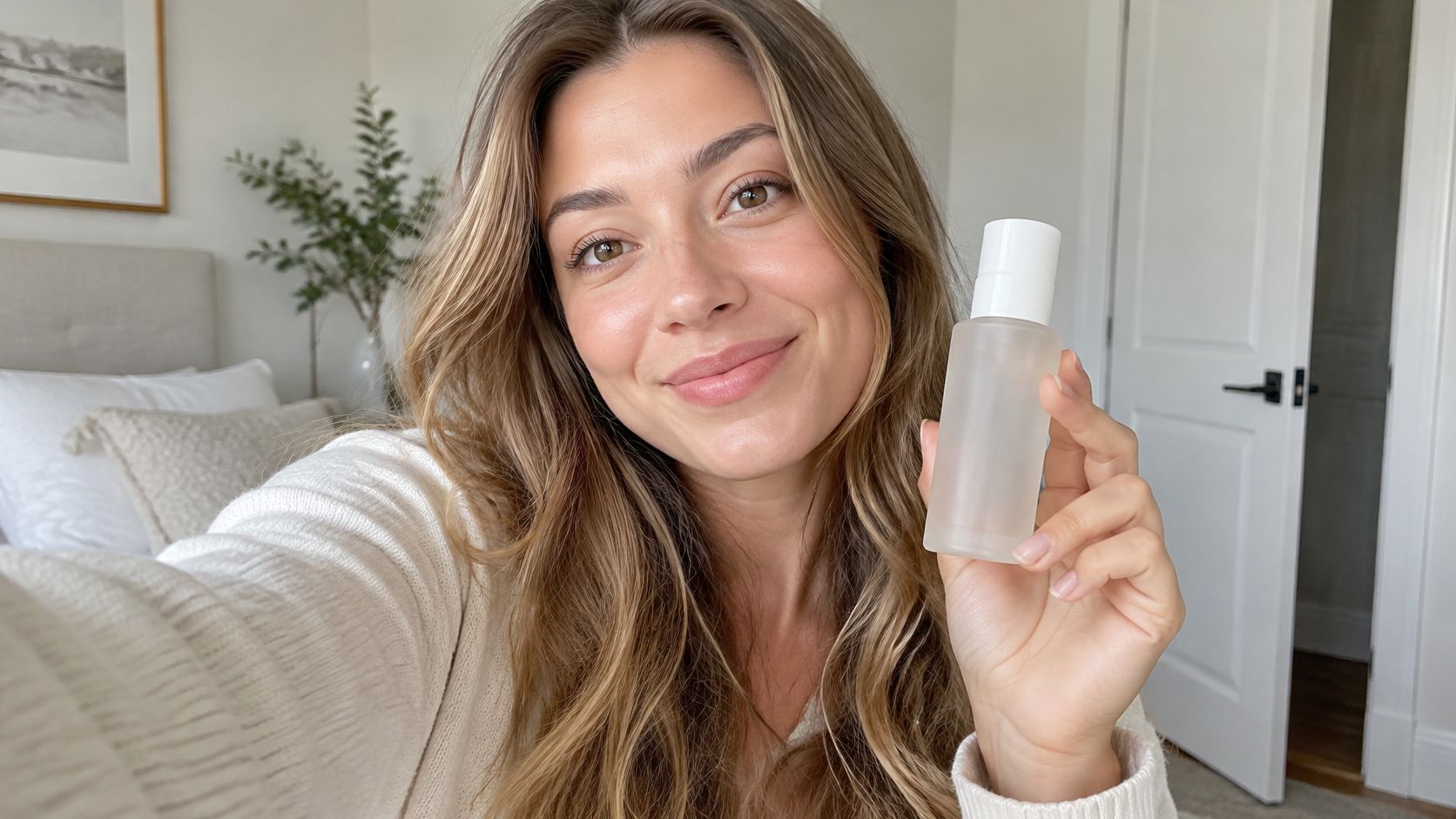
A believable testimonial sounds like someone explaining a purchase, not reading a brand positioning statement. For a moisturizer, the useful story might be how it fits under makeup, rather than how luxurious the formula feels.
Use an actual customer's approved account when you're presenting personal experience. A hired presenter can demonstrate a product or explain its features, but shouldn't pretend to have used it for months. Casual delivery doesn't make an invented endorsement authentic.
<a id="make-the-experience-specific"></a>
Make the Experience Specific
- Ready-to-test hook: My moisturizer wasn't the problem. The way it sat under my makeup was. Use this only when it reflects the speaker's real experience.
- Shot-level execution: Start with the customer holding the product near their face. Cut to application, then show makeup going over the same area without hiding the texture behind a beauty filter.
- A/B variant: Compare a frustration-led opening with an outcome-led opening: This is what I use before foundation. Keep the demonstration and closing action unchanged.
Record beside a window, lock exposure, and keep the phone steady. These basics of lighting and stability for mobile creators matter more than adding cinematic transitions.
The trade-off is control. Overdirect the presenter and you lose their natural phrasing; leave everything unscripted and you may never reach the product benefit. Give them a factual outline, then let them phrase the connective language.
<a id="2-product-demonstration-ads"></a>
2. Product Demonstration Ads
Show the product handling the exact task customers are buying it for. A vegetable chopper should show the ingredients entering, the mechanism working, and the resulting pieces. A montage of someone smiling beside chopped vegetables leaves the central question unanswered.
Kantar's testing of more than 13,000 advertisements across 75 markets found that ads incorporating product benefits produced a 10-point increase in persuasion, according to the creative-effectiveness summary published by SHNO.
<a id="let-the-viewer-inspect-the-result"></a>
Let the Viewer Inspect the Result
For a kitchen-tool ad, try this production sequence:
- Ready-to-test hook: Here's what happens when the onion goes in whole.
- Shot-level execution: Open on the finished result, then cut to a continuous view of loading and operating the tool. Finish with a close-up that lets viewers judge the cut quality.
- A/B variant: Test result-first against process-first. Don't change the ingredient, camera angle, or product claim between versions.
A demonstration should be easy to understand without narration. Use labels to identify the action, not to announce an unsupported superiority claim.
This embedded video provides another reference for inspecting how a demonstration presents its proof.
<iframe width="100%" style="aspect-ratio: 16 / 9;" src="https://www.youtube.com/embed/SgmuplXU2iY" frameborder="0" allow="autoplay; encrypted-media" allowfullscreen></iframe>Keep setup conditions honest. Pre-cutting ingredients or concealing cleanup can make a demonstration more impressive while making it less useful to buyers. Show awkward details when they affect the purchase decision, including capacity, handling, or the effort required to reset the product.
<a id="3-problem-solution-hook-ads"></a>
3. Problem-Solution Hook Ads
Your charging cable keeps falling behind the desk.
That's a usable opening for a cable holder because it names a recognizable event. Upgrade your workspace is weaker: viewers have to work out what's wrong and why the product matters.
Find the frustration in support tickets, product reviews, and customer comments. Borrow the customer's vocabulary without copying an identifiable review into an endorsement you don't have permission to use.
<a id="show-the-annoyance-before-explaining-it"></a>
Show the Annoyance Before Explaining It
- Ready-to-test hook: Still fishing your charger out from behind the desk?
- Shot-level execution: Show a hand reaching into the gap, then cut to the holder being attached at the desk edge. End with the cable remaining accessible after the phone is disconnected.
- A/B variant: Replace the spoken question with the visual failure alone. Keep the product reveal and CTA identical.
The product should enter as soon as the viewer understands the problem. Repeated frustration shots can feel like padding, especially when the solution is visually simple.
Practical rule: Make the annoyance recognizable without making the customer look foolish.
This format works well for narrow, frequent inconveniences. It's less convincing when the script inflates a minor annoyance into a crisis.
For a productivity app, show the missed handoff or duplicated task instead of generic footage of someone looking stressed. Then demonstrate the specific feature that prevents that failure. A broad promise about getting organized won't explain why someone should switch tools.
<a id="4-before-and-after-transformation-ads"></a>
4. Before-and-After Transformation Ads
A desk organizer has a built-in visual story: loose stationery becomes an accessible workspace. The ad works when viewers can see what changed and understand how the product caused it.
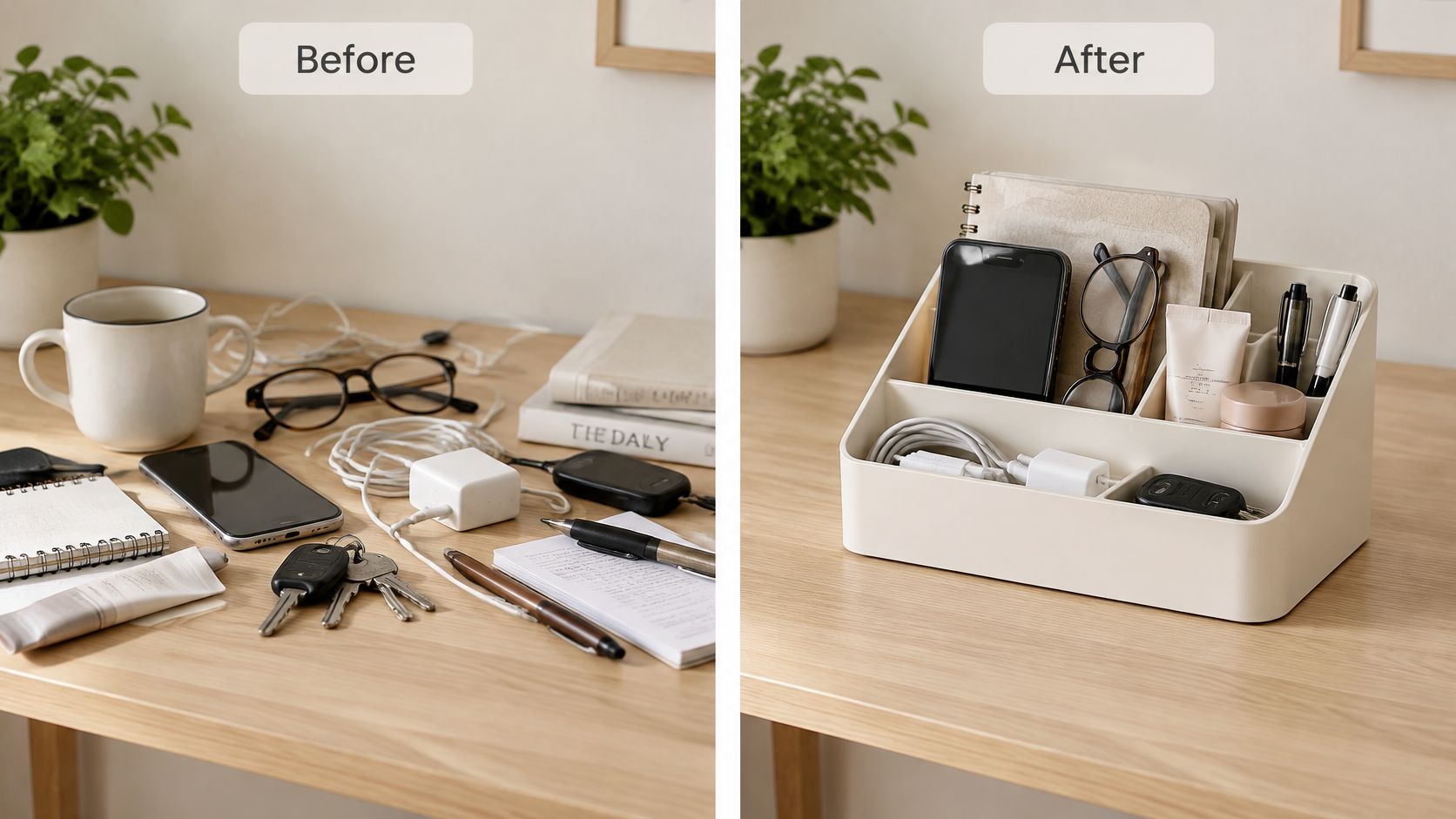
Lock the camera, preserve the lighting, and keep the same objects in both states. If you remove most of the clutter off-camera, you're demonstrating tidying rather than the organizer's capacity.
<a id="preserve-a-fair-comparison"></a>
Preserve a Fair Comparison
Ready-to-test hook: Same desk. Same supplies. Everything within reach.
Shot-level execution: Begin with the cluttered overhead view. Show hands placing the existing items into the organizer, then return to the identical overhead framing. Add a close-up of someone retrieving the item they use most.
A/B variant: Compare a sliding before-and-after reveal with a continuous organizing sequence. Use the same final arrangement so you're testing presentation rather than a different result.
Transformation ads trade nuance for immediate clarity. That's useful for storage, cleaning, and photo-editing tools, but risky when results depend heavily on time, technique, or individual circumstances.
For an image editor, label the actual operation, such as background removal. Don't show a generated replacement image as proof that the tool recovered detail from the original.
A still-image version can also be worth testing. It lets viewers inspect the comparison without waiting for a transition, although it won't explain the process as clearly.
<a id="5-talking-avatar-host-led-ads"></a>
5. Talking Avatar Host-Led Ads
A host-led ad is useful when customers need an explanation before they can appreciate the product. Think of a refillable cleaning system: the presenter explains what stays, what gets replaced, and how the refill works.
An avatar can handle that explanatory role. It shouldn't impersonate a customer, invent credentials, or imply personal product experience.
Capgemini's consumer trends report found that 67% of consumers expect brands to clearly identify AI-generated advertising, according to its consumer trends report.
<a id="give-the-host-a-defined-job"></a>
Give the Host a Defined Job
- Ready-to-test hook: Keep the bottle. Replace the refill. Here's how it works.
- Shot-level execution: Open with the host beside a clear product image, then switch to real footage of the refill being fitted. Return to the presenter only if they add information the demonstration can't convey.
- A/B variant: Test the host opening against a hands-only opening, using the same narration and proof footage.
Use a consistent presenter, background, and speaking style across related explanations. Familiarity can help viewers recognize the series, but a recurring host still needs something useful to say.
This guide to talking avatar AI offers context for building the presenter-led format.
Place the AI-presenter disclosure where viewers can read it, not behind interface controls. Keep actual product performance in real footage whenever the claim depends on physical behavior. A synthetic host can explain a mechanism; generated action shouldn't stand in for evidence that the mechanism works.
<a id="6-music-synced-product-showcase-ads"></a>
6. Music-Synced Product Showcase Ads
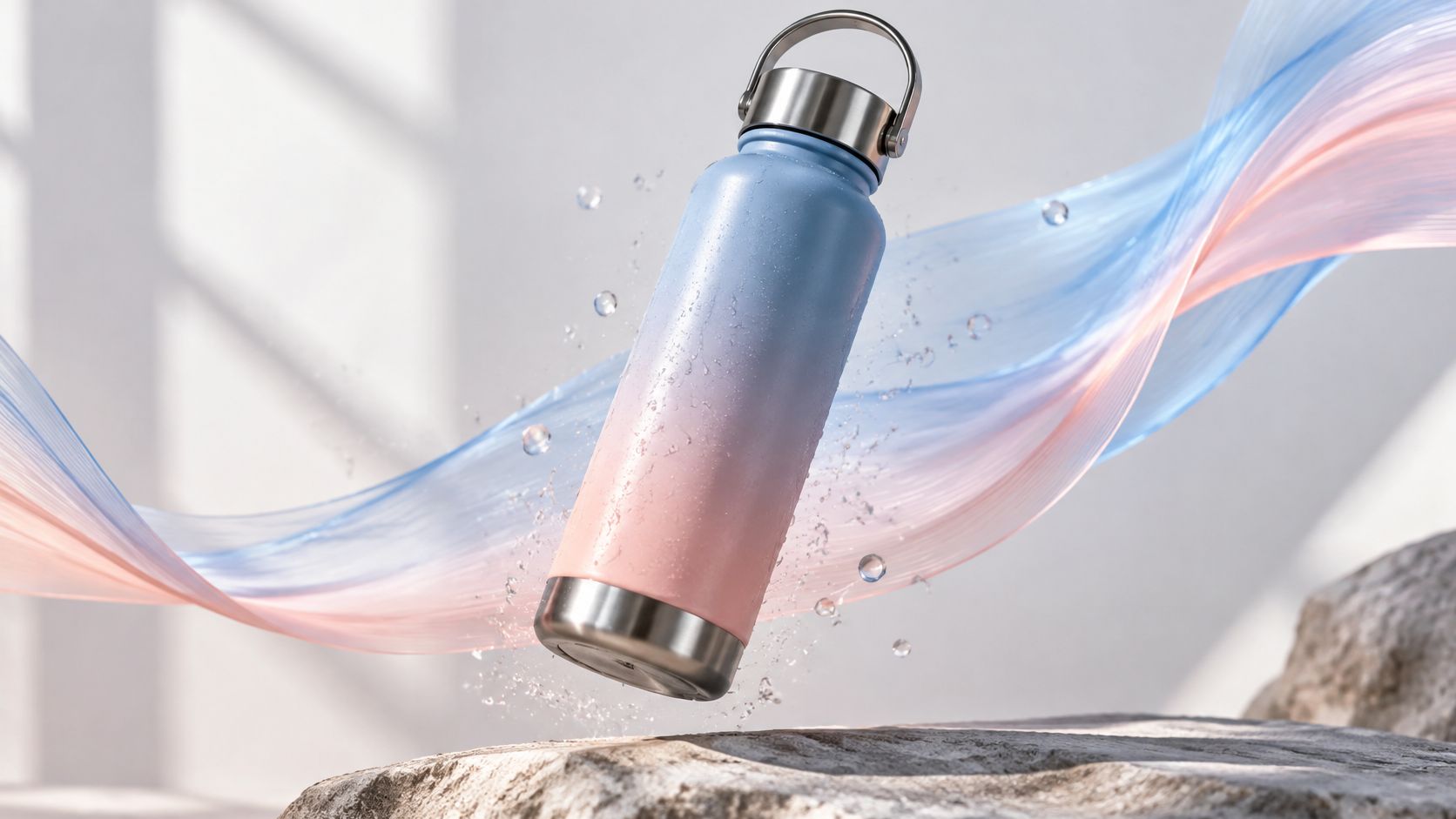
A water bottle doesn't always need a spoken pitch. The lid closing, the bottle sliding into a bag pocket, and condensation catching the light can make a clear visual argument.
The mistake is editing attractive shots that never establish what makes the product worth considering.
<a id="build-the-rhythm-around-product-actions"></a>
Build the Rhythm Around Product Actions
- Ready-to-test hook: Your everyday bottle, without the bag-pocket struggle. Only use that claim if the fit is demonstrated for the bag shown.
- Shot-level execution: Match cuts to meaningful actions: lid click, pocket insertion, grip detail, and final pack shot. Hold the important proof long enough to inspect it instead of cutting every shot at the same pace.
- A/B variant: Compare a product-action opening with an abstract beauty shot. Leave the remaining sequence and soundtrack unchanged.
Choose music you can use in paid placements. A track being available in a social app doesn't automatically establish permission for every commercial use.
Use this guide to an application to make video with music to think through audio-led assembly.
Music-led ads suit fashion, merchandise, beverages, and visually distinctive accessories. They're weaker when customers need a detailed explanation of compatibility or setup.
If the ad stops making sense when muted, add a visible product promise before adding more cuts.
<a id="7-animated-and-stylized-explainer-ads"></a>
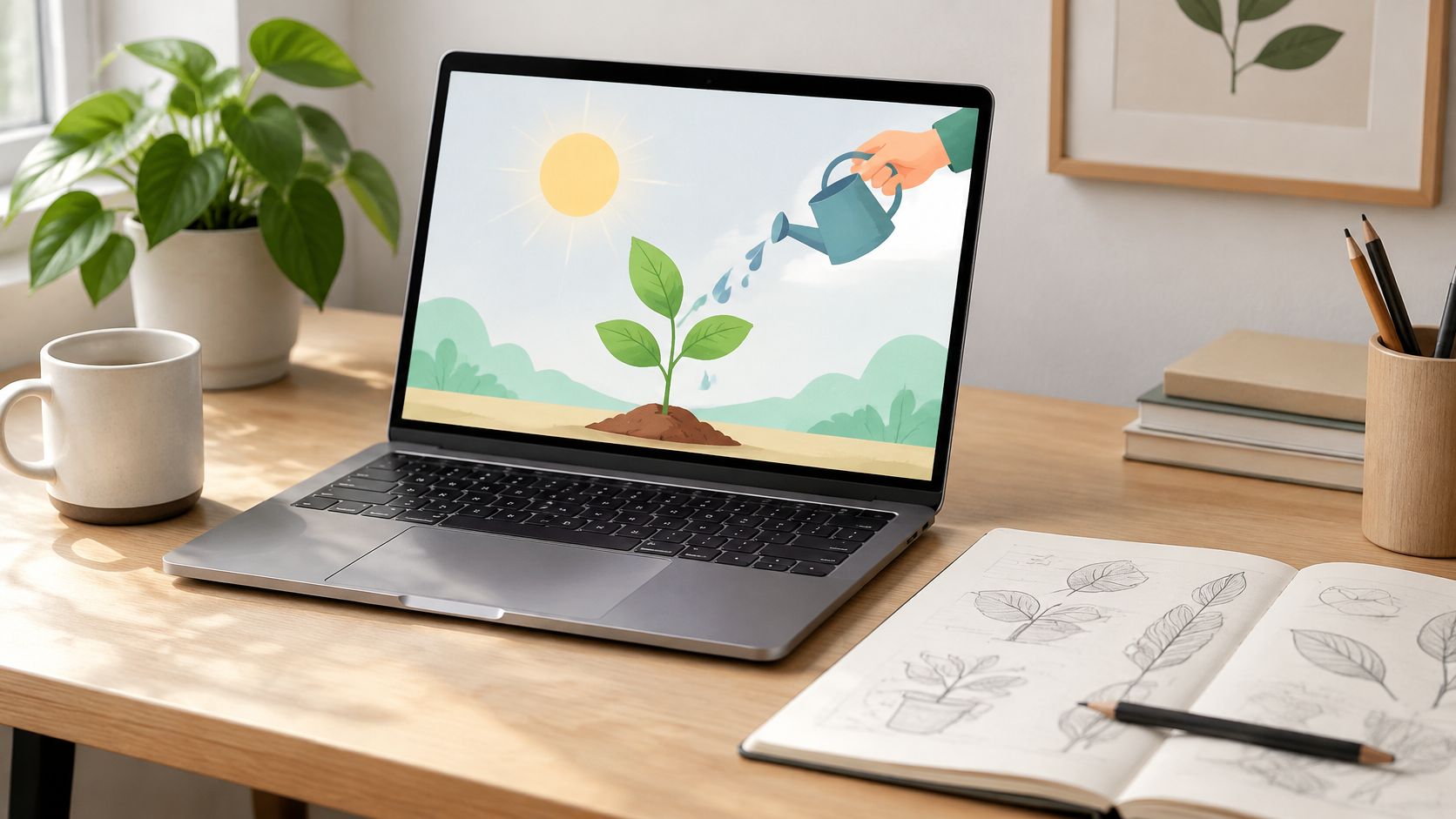
7. Animated and Stylized Explainer Ads
Software benefits often happen somewhere a camera can't capture directly. An automatic backup service, for example, needs to explain what happens between saving a file and recovering it later.
Animation can make that process understandable. It becomes a distraction when viewers remember the character but can't describe the product.
<a id="connect-the-metaphor-to-the-interface"></a>
Connect the Metaphor to the Interface
Ready-to-test hook: Deleted the file? Here's where your backup comes in.
Shot-level execution: Show a file disappearing from a simple workspace, then reveal its backed-up copy. Cut from the animated explanation to the actual recovery interface so viewers can connect the concept to the product they'll use.
A/B variant: Test a literal interface-led opening against the animated file-loss scenario. Keep the recovery demonstration and offer consistent.
Choose an original visual language and reuse it. Consistent line weights, colors, and character proportions help the ad feel intentional. Avoid imitating recognizable copyrighted characters or a distinctive studio identity.
The trade-off is production clarity versus product fidelity. A stylized workflow can omit distracting interface details, but it can also imply that a task is easier than it really is.
Show any setup step that materially changes the promise. If recovery depends on enabling backups beforehand, make that condition clear. The animation should simplify the explanation, not remove the requirement that makes the benefit possible.
<a id="8-caption-led-hook-ads"></a>
8. Caption-Led Hook Ads
Try watching the draft with the sound off and your phone held at a normal viewing distance. If you can't follow the argument, captions may need to carry more of the message.
Caption-led ads don't need a transcript pasted over footage. They need a readable sequence of ideas, with the product action supporting each phrase.
<a id="write-for-the-screen-first"></a>
Write for the Screen First
For a compact garment steamer:
- Ready-to-test hook: Packed shirt. Crushed collar. Meeting soon.
- Shot-level execution: Open on the wrinkled collar with the text placed in clear background space. Cut to the steaming action, then reveal the treated area under the same light.
- A/B variant: Test the situational hook against a direct benefit hook: Freshen up the shirt you packed. Keep the footage, typography, and CTA unchanged.
Use short lines, strong contrast, and selective emphasis. Highlight the word that changes the meaning rather than animating every word.
A caption generator for video can help with timing and styling, but review product names, technical terms, and negations manually. A missing not can reverse a claim.
Caption-heavy ads work well when your message is easy to express plainly. They become tiring when the viewer has to read dense text while also inspecting a demonstration.
Keep subtitles separate from headline text when they serve different purposes. Preview the finished ad with platform controls visible, and move important text away from the product, account name, and action buttons.
<a id="9-multilingual-localized-ads"></a>
9. Multilingual Localized Ads
A translated voiceover isn't automatically a localized ad. A kitchen product may need different ingredients, cooking references, or measurements before the demonstration feels relevant in another market.
Start with an ad that already communicates the benefit clearly. Localization won't rescue a confusing demonstration, and it adds more moving parts to diagnose.
<a id="adapt-the-buying-situation"></a>
Adapt the Buying Situation
Ready-to-test hook: A cleaner way to prep tonight's dinner. Have a native-speaking reviewer rewrite the thought naturally rather than preserve the English sentence structure.
Shot-level execution: Keep the product action intact where it remains relevant. Replace captions, narration, packaging close-ups, and meal references when they don't match what customers in that market can buy.
A/B variant: Compare a straightforward native-language adaptation with a locally specific use case. Keep the offer and landing page consistent within that market.
For a reusable food container, that might mean showing a familiar packed lunch rather than keeping an unfamiliar meal just because the footage is finished.
- Review meaning: Ask a native speaker to check tone, claims, pronunciation, and whether the hook sounds like advertising translated from somewhere else.
- Review availability: Match the ad to local stock, delivery coverage, product specifications, and customer support.
- Review the destination: Keep the landing page language and purchase path consistent with the ad.
Longer translated phrases can crowd the frame or rush the narration. Rewrite and retime the scene instead of shrinking captions until they're difficult to read. Preserving the argument matters more than preserving every word.
<a id="10-rapid-ab-variant-testing-ads"></a>
10. Rapid A/B Variant Testing Ads
A folder full of exports isn't a testing system. You need to know which question each variation answers.
For a skincare product, a useful test might compare texture against application order. Changing the presenter, soundtrack, offer, and opening simultaneously may produce a winner, but it won't tell you which change helped.
<a id="make-each-export-answer-a-question"></a>
Make Each Export Answer a Question
- Ready-to-test hook: See the texture before you choose your moisturizer.
- Shot-level execution: Open on the product being spread across skin. Keep the rest of the ad fixed while testing that opening against a shot showing where the product fits in a routine.
- A/B variant: Label the hypothesis explicitly: texture proof versus routine clarity. Use the same CTA and destination.
Name files so the product, format, hook, and revision are identifiable. Keep a simple test log with the hypothesis, launch conditions, spend, and purchase outcome.
Don't judge a conversion-focused ad only by clicks. A dramatic hook can attract curiosity without attracting buyers. If people click but don't purchase, inspect the offer and landing page variants to test before discarding the creative.
Testing discipline: Preserve the winning promise while testing a different way to communicate it.
Refresh based on deterioration, not just the calendar. Check whether viewers are seeing the ad repeatedly, whether the audience changed, and whether the purchase path still works. Then alter the smallest plausible cause instead of rebuilding everything.
<a id="how-the-10-product-ad-ideas-compare-by-best-use-case-key-metric-and-main-trade-off"></a>
How the 10 product ad ideas compare by best use case, key metric, and main trade-off
| Item | Best For | Key Metric | Main Trade-off |
|---|---|---|---|
| UGC-Style Testimonial Ads | E-commerce and DTC teams; performance marketers | Hook rate (3-second views) | Requires convincing scripts and appropriate AI disclosure |
| Product Demonstration Ads | E-commerce and DTC teams; agencies | Watch-through rate | Less suited to abstract offerings; demos must be accurate |
| Problem-Solution Hook Ads | Performance marketers; creators | Hook rate | Can feel formulaic if the problem is not relatable |
| Before-and-After Transformation Ads | E-commerce and DTC teams; agencies | Engagement rate | Results must be genuine, and some claims face platform restrictions |
| Talking Avatar Host-Led Ads | Agencies; creators | Brand recall | Unnatural delivery can reduce engagement; disclose AI presenters |
| Music-Synced Product Showcase Ads | Musicians; creators | Average watch time | Music rights must be confirmed; product benefits can get lost |
| Animated and Stylized Explainer Ads | Agencies; performance marketers | Video completion rate | Style may not suit every category; avoid risky imitation of protected styles |
| Caption-Led Hook Ads | Creators; performance marketers | Average watch time | Busy captions can distract and styles may become dated |
| Multilingual Localized Ads | E-commerce and DTC teams; agencies | Regional click-through rate | Translation may miss cultural nuance and requires market-specific review |
| Rapid A/B Variant Testing Ads | Performance marketers; e-commerce teams | Click-through rate | Needs sufficient budget and volume; changing too many variables obscures results |
<a id="turn-these-product-ad-ideas-into-a-weekly-testing-routine"></a>
Turn These Product Ad Ideas Into a Weekly Testing Routine
Choose formats that fit the evidence you can produce. A physical tool with an obvious action usually deserves a demonstration. A product with a misunderstood mechanism may need an explainer. A purchase shaped by personal preference can benefit from an authentic customer account.
Start with a pair of formats and write a small batch of hook variants for each. Produce them together so lighting, product appearance, and demonstration conditions remain consistent. That makes the production session more efficient and the resulting comparisons easier to interpret.
<a id="find-the-idea-write-the-script-generate-the-video"></a>
Find the Idea, Write the Script, Generate the Video
Build the brief around a buying question rather than a vague request for something engaging.
- Find the idea: Pull a specific objection, desired outcome, or use case from customer conversations. Decide what viewers must understand before they're willing to click.
- Write the script: Connect the hook to visible proof, then end with an action that matches the destination. Remove sentences that repeat what the viewer can already see.
- Generate the video: Assemble the narration, footage, captions, and music. Review the actual output rather than assuming the script survived production unchanged.
Before launch, check the ad against the product page. Packaging, included accessories, availability, and claims should agree. An attractive creative can still send poorly qualified traffic if it promises something the destination doesn't deliver.
Review the finished video muted, with sound, and inside a placement preview. Look for cropped labels, captions hidden by controls, unnatural pauses, and proof shots that disappear before viewers can inspect them. If a scene fails, redo that scene instead of rebuilding an otherwise usable ad.
<a id="review-performance-without-guessing"></a>
Review Performance Without Guessing
Decide what success means before launch. For a purchase campaign, completed sales and acquisition cost matter more than applause in the comments. Attention and click metrics help diagnose the journey, but they aren't substitutes for the business outcome.
Allow enough delivery to make a meaningful comparison, and avoid declaring a winner from a brief burst of activity. Keep audience, placement, and offer differences visible in your notes. When those conditions change, treat the comparison cautiously.
Review winners regularly and prepare refreshes before you urgently need them. Replace a tired opening, introduce another proof shot, or answer a different objection while preserving the promise that still attracts buyers.
The practical advantage of a weekly routine isn't endless novelty. It's knowing what to make next, why you're making it, and what result would justify keeping it. That's how product ad ideas become a reusable production system rather than a growing folder of unexplained exports.
ClipNova turns prompts, scripts, or images into finished videos with voiceover, captions, and music, helping you produce different treatments of the same product idea. Visit ClipNova to build an ad from your brief and refine individual scenes before posting.
Ready to ship your own?
Start creating viral videos with AI in under twenty minutes, no credit card required.